Wednesday, April 05, 2006

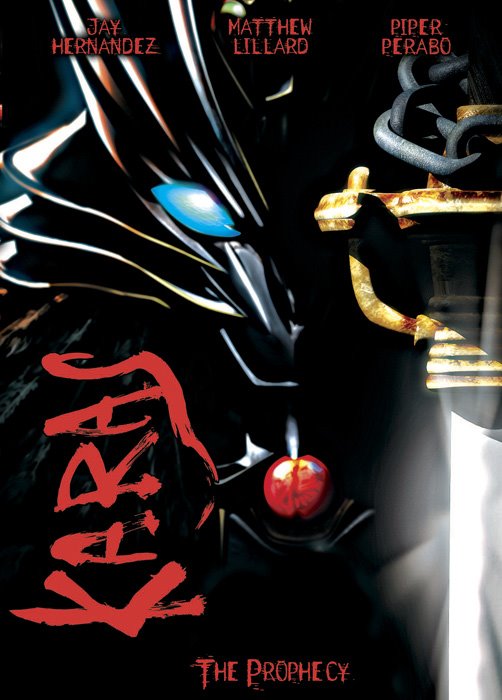
Dark Animes: Karas


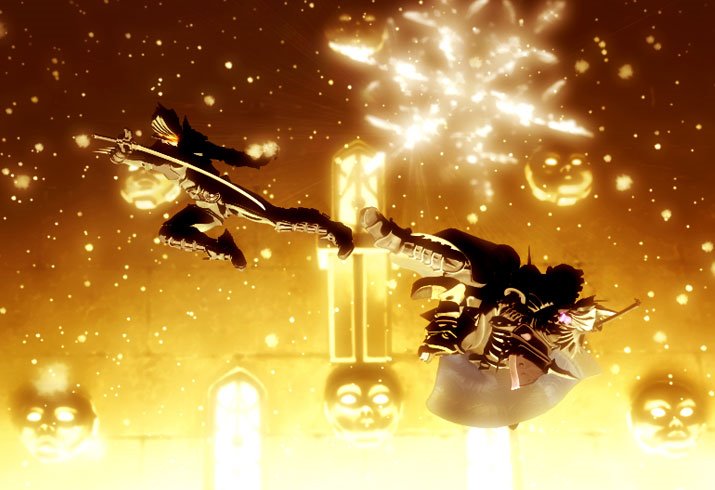
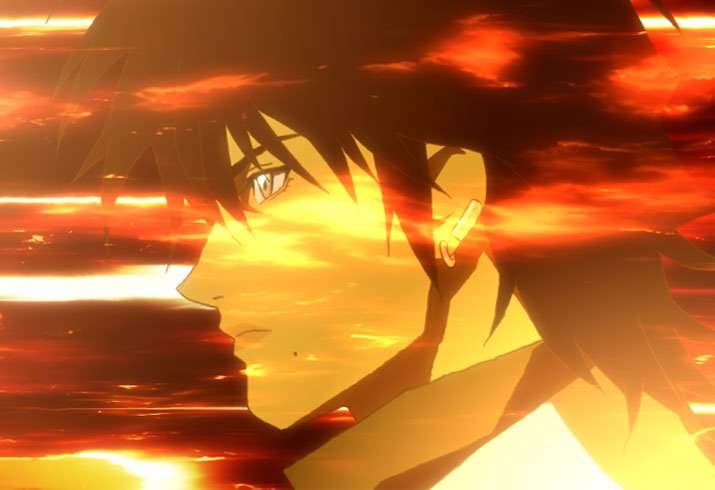
This appears to be one hell of a release! Hope you like the sneaks as well as I did...

For now I'll have to leave you with some previews. I promise I'll write something about it after I see it!


Some press comments about this anime:


"Top 5 most anticipated anime of 2006" - Anime Insider

"... Impossible to tear yourself away" - Newtype USA

"Anime's Batman Begins" - Anime Insider


You can download a PDF version of the press release here: Karas' Press Release


Interesting Links About This Anime:


For the DVD / OVA (6 Episodes):

Official Site (English)
Official Site From The OVA (Japanese)

AnimeDB - Karas, OVA
Anime News Network - Karas, The OVA
Anime Web Turnpike - Review on the release announcement
A review on Eat My Brains


For the Mini-Comics version:

Dark Horse Site (with preview)
IComics Review

I guess it will turn out to be really something!


Wednesday, January 25, 2006

Elizabeth Bathory

Some call her the queen of blood. Others call her the first true vampire. Whatever her label, Elizabeth Bathory has gone down into the history books as a sadistic woman, and whose horrific crimes have made her one of the most infamous women in vampire lore.

Elizabeth Bathory was born a noblewoman in 1560. Her family held lands throughout Transylvania, and were considered one of the most powerful families in the country. When she was teenager, she was betrothed and married to an equally powerful nobleman by the name of Count Ferencz Nadasdy. Throughout their marriage she took many lovers.

At age 25, Bathory began to be terrified of growing old and losing the beauty that she had come to depend on so greatly. After Count Nadasdy's death in 1604, she moved to her family's lands in Vienna, where her obsession would quickly grow dark and evil. Bathory had by this point in her life, according to some accounts, begun to dabble in some forms of sorcery, attending rituals that would include the sacrifice of horses and other animals.

Bathory's personal obsession with blood started quite harmlessly, by all accounts. One of her servant girls had not been performing to her standards, so Countess Bathory struck the young servant girl in the face with scissors. The servant girl's blood sprayed across Bathory's hands. When the Countess went to rinse off the blood, she felt her skin looked smoother and younger than it had in years. The tenuous connection between blood and youth had been made, and it was from here that she began her bloody descent into evil.

Convinced that blood, particularly the blood of young girls, was the secret to eternal youth and beauty, Countess Elizabeth Bathory began to devise scheme after scheme to provide herself with the blood, and therefore the youth, she so desperately sought. During her reign of terror, which lasted several years, some accounts of her murders number in the 600 region or more. Some of these six hundred women killed were noblewomen like Bathory, albeit of a lower station, that she persuaded to come and work for her.

The murders were not as simple nor as straightforward as you might think. Bathory did not deal in simpicities like slitting the throats of the young girls she killed. Most of these servant girls were tortured by Bathory for weeks or even months before they were killed. They were cut with scissors, pricked with pins, even prodded with burning irons onto sharp spikes in a cage hung from the ceiling to provide Bathory with a "blood shower".

No one, not even a noblewoman, can continue these types of crimes indefinitely without questions being raised. The year 1610 marked the first of the inquiries into her crimes. By December of 1610, she was put on trial for her crimes. It has been speculated that the trial was brought about so speedily not only to bring quick justice for the murdered girls, but also (and primarily) to allow the local government to confiscate her family's not inconsiderable land holdings. Many believe the main reason the noblewoman was put to trial at all was for this reason.

No one can accomplish such a venerable feat as six hundred murders alone. Erzsi Majorova, the widow of a local tenant farmer, has long believed to be both the instigator and the brains behind the procuring and the disposal of the murdered girls. Many other accomplices, not named, were also put to trial, and found guilty. All accomplices, including Majorova, were put to death, each by different methods depending on the roles they played in the crimes.

Due to her nobility, Bathory was not allowed by law to be sentenced to death. She was sentenced to life imprisonment at the top of her castle in Cachtice. Her small room had no windows, no doors, and only a small opening in the wall to allow food to be passed through. There were few slits for air, and that was the total of her contact with the outside world. Elizabeth Bathory died in that room in August of 1614.

Her reputuation as a vampire grew not only from her greed for blood to bathe in to maintain her youth, but also for rumours that surfaced during the trial. It was said she bit the young girls and drank their blood outright. Evidence of this was difficult to come by as her court documents were sealed after the trial due to their scandalous nature. They resurfaced later, but were never found in intact form.

Bathory's reputation as a vampire has been celebrated numerous times in film. The movies Daughters of Darkness (1970), Countess Dracula (1971), Blood Castle (1972), Ceremonia Sangrienta (1972) and La Noche de Walpurgis (1972) all have brought Countess Elizabeth Bathory's story to the big screen.

© Angie McKain

The Vampire of Croglin Grange

Late in the 17th century, there was a town called Croglin Grange (in Cumberland County, England). It's been said by some that the town was visited by a vampire... and the young lady in the tale barely escaped with her life.

A one-story home in Croglin Grange was rented to a two brothers and their sister. One summer night, when the heat from the day still clung to the air, the sister was looking out her window at the stars. It was too hot to sleep. Suddenly, she noticed two lights that flickered in and out of the group of trees that lay beyond her window.

She watched the lights as they emerged from the trees. She had a sense of something dark and foreboding. Frightened, she ran to the door.

As she unlocked the door, she heard scratching at the window, and then pecking, as though someone were trying to get inside. With a start she realized that fingers were unpicking the lead from the window. The window glass crashed crashed into the room and the creature climbed in.

Long bony fingers twisted in her hair as she felt teeth pierce her neck. She screamed aloud. Her scream woke her brothers and they scrambled to break down the locked door to her bedroom to come to her aid. By the time the brothers got through the door, the sister was already unconscious on the bed, and the creature had fled. Although one brother gave chase, the creature eluded him.

The family moved away to help the sister to heal; seven years later they returned to face their demons. That March, the sister heard scratching again at the bedroom window. She screamed as loudly as she could.

One brother managed to wound the creature in the foreleg with a pistol but the creature still escaped into an old family crypt that had been in Croglin Grange for centuries.

The next day one of the brothers summoned everyone in Croglin Grange to the crypt and opened the vault. Inside, all coffins but one had been broken. One was intact with only the lid skewed to one side. Within, the townspeople found a withered, mummified corpse with a fresh bullet wound in the foreleg.

Disturbed, the villagers removed the corpse and burnt it atop a pyre; and the vampire of Croglin Grange was no more.

© Angie McKain

The Story of Arnold Paole

This story is a very curious myth about a man who became a vampire after having had encounters with one of thos undead beings.

It tells the tale of a 18th century man named Arnold Paole that returned to his hometown near Belgrade after having a troubled incident with an undead being while stationed during his military service. In this point I Angie McKain's version states that it was in Greece, while on Wikipedia they mention a place name Gossowa which they suppose is Kosovo.

After having sustained severe injuries from a fall while working he eventually died.

The problems began with reports from locals about having seen Arnold Paole alive after he had been buried a month before. And those locals turned up dead for unknown reasons some time later.

So, a group of experts decided to digg him up. What they found then were clear marks of what they believed was a vampire -  no skin decomposition, fresh skin and nail growth, fresh blood on the , etc.

Upon such evidence they took the necessary measures to "kill the beast" - with the traditional stake and garlic. Wikipedia states also that they did the same to all the villagers that had died after having seen Paole.

The solution worked for some years, but then it started hapenning again - the misterious deaths and reports of dead people walking the village.

The experts got to the graveyard again to investigate the case and they found more than 10 corpses with the same vampiric signs as Arnold Paole had when he was dug up. This time they wrote a report an signed it. The report is still amongst various history books and you can find an English version here: http://www.dagonbytes.com/vampires/history/arnoldpaul.htm.

Nowadays, the story is refuted taking the lack of medical knowledge at the time as the basis among other inconsistencies on the report.

References:

You can find a complete version of the story on Vampyre Vineyards written by Angie McKaig.

Wikipedia has also an article on that: http://en.wikipedia.org/wiki/Arnold_Paole. It is much more accurate and descriptive than the one from Angie McKain and the facts differ in many aspects. Many copies of this version are duplicated in several websites so I chose this one as the "proper one" due to the Wikipedia's reputation.

Tuesday, January 24, 2006

Quotes On The Vampire Lore

"Vampirism was one of the most demonic outbreaks of mass hysteria ever to sweep the world. Its origins are rooted at the beginning of time and almost all of them are founded on superstition."

- Anthony Masters, author of The Natural History of The Vampire


"The origins of the vampire myth lie in the mystery cults of oriental civilizations...the Nepalese Lord of Death, the Tibetan Devil, and the Mongolian God of Time."

- Devendra P. Varma, author of The Vampire in Legend, Lore, and Literature


"The concept of the vampire is not only firmly rooted in legends and folk-myths of antiquity, but also established by facts of history and eye-witness accounts."

- Devendra P. Varma, author of The Vampire in Legend, Lore, and Literature


"[T]he vampire (or its structural equivalent) was a universal figure in human culture, which emerged in the natural course of life. That is to say, the vampire probably emerged independently at many points in human culture. There is little evidence to suggest that the vampire emerged at one time and place, and then diffused around the world from that primal source."

- J. Gordon Melton, author of The Vampire Book: The Encyclopedia of the Undead


"The vampire is the night-prowling symbol of man's hunger for - and fear of - everlasting life...The mixture of attraction and repulsion...is the essence of the vampire concept."

- Margaret Carter, author of the preface to Varney the Vampire


"There are reasons for talking mummies and roaming vampires - psychological ones. Psychologists tell us that nearly every one of us has a hidden fear of being buried alive."

-Thomas Aylesworth, author of Vampires and Other Ghosts


"Whether we read books and watch films about vampires for psychological reasons or simply for entertainment, each of us keeps the vampire myth alive. While we may be able to understand rationally that vampires do not exist, who among us does not start at the shadow at the window, the squeak in the dark?"

- Daniel C. Scavone, author of Vampires


© Angie McKaig

The Myth Of Cain

One of the most current and popular myths involving the vampire origin is that of the Biblical character, Cain.

Adam and Eve had two sons, Cain, a tiller of the ground, and Abel, a shepherd. Both brought offerings to God, Cain brought the fruits of the ground, and Abel, brought one of his flock as an offering. God approved of Abel’s offering, but not that of Cain’s. Cain became very angry at this. As he and Abel where in the field on day, Cain rose up and struck his brother repeatedly until he was dead. God asked Cain “Where is your brother?” and Cain answered “Am I my brothers keeper?”. God asked Cain what he had done, that his brothers blood cried to him from the earth. For his punishment in slaying his brother, Cain was cursed, the ground would not produce anything for him any longer, a fugitive and vagabond he would be. Cain told God his punishment was more than he could bear, to always be hidden from the face of God and driven out from the face of the earth. Cain also told God his concern of being killed, but God set a mark upon Cain that if any should harm him, they would suffer punishment sevenfold. Cain then left into the land of Nod.

In myth, it is said that the curse that God had set upon Cain was to be cast into a world of darkness with a continuous craving for blood, and this curse has been passed from generation to generation, all the way up to the vampires of today. It is said that when Cain went into the world of darkness, that he became acquainted with Lilith, the first wife of Adam. She had given some of her blood to Cain, which awakened him to his ability. After wandering for years in the wild, he returned to being amongst the mortals where he built a city called Enoch. There, Cain created the second generation of vampires by turning three mortals, they in turn created a third generation of vampires in vast numbers, and Cain finally forbade the creation of vampires from thence on.

After some time, the city Cain had built was destroyed by a flood. Cain ended up abandoning the city and leaving all the generations of vampires behind to do what ever they wanted, but before he left, he reminded them of his command to not create any more vampires. The vampires completely rebelled against Cain’s command and made a 4th generation of vampires, who rose up against the elder vampires of the third generation, killing all but a very few.

Over the next 1000 years, At times, it was said that a person who claimed to be Cain appeared here and there. One of his most heightened appearances is known in a story in which he appeared amongst a band of gypsies and embracing a man by the name of Ravnos, after his father had been killed by other vampires. As time went on, Ravnos was introduced to Ennoia (Ennoia was the daughter of Lilith, and half sister of Cain.)Ravnos ended up turning Ennoia into a vampire. Ennoia later betrayed Ravnos and caused death to come upon Ravnos. Because of this, Cain cursed her. Ennoia later became known as the creator of the clan Gangrel. It is said that if Cain ever makes any appearances, it is done rather speedily.
© Larae of Darkness Embraced

Tuesday, January 17, 2006

Tuesday, November 15, 2005

Vlad, The Impaler

Introduction
(Copyright © 2002 www.vladtheimpaler.com)


As you may well know, author Bram Stoker (1847-1912) based the title character of his 1897 novel Dracula on an actual human being, or should we say inhuman being.

[...]


What is interesting to note, is that Stoker's vampire, while being loosely based on Vlad the Impaler, is nowhere near as threatening, nor as sadistic.
Stoker's Dracula is a mysterious, somewhat sensual character who kills and feeds to survive, much like any being in nature. In fact, as much as there is reference to the evil of Dracula, it can be reasoned that all of his actions were motivated by survival.
Vlad the Impaler, on the other hand, killed not to feed, but to revel in his own power, and just for the sheer pleasure of seeing the suffering of his numerous victims.

[...]

Vlad the Impaler wasn't a "real" vampire, but he probably caused more rivers of blood to flow than any other tyrant in the history of the world.
History

Detailed history and the most accurate facts about Vlad's life can be found on the following links if you care to take a look:

http://en.wikipedia.org/wiki/Vlad_Tepes

http://www.vladtheimpaler.com/vlad_the_impaler_bio_001.htm
The Impalement
(in Wikipedia)

Impalement is an act of torture and/or execution whereby the victim is pierced by a long stake.

The penetration can be through the sides, from the rectum, or possibly through the mouth.

The stake would be usually planted in the ground, leaving the victim hanging to die.

In some forms of impalement, the stake would be inserted so as to avoid immediate death, and would function as a plug to prevent blood loss — thus extending the victim's agony for many hours.

One way to achieve this gradual death is to insert the stake through the rectum deep into the body of the victim until it left the body near the right shoulder, thus avoiding damaging the heart.
Reputation
(in Wikipedia)

More than anything else the historical Dracula is known for his inhuman cruelty.

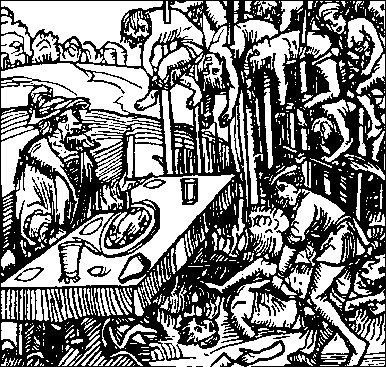
Impalement was Dracula's preferred method of torture and execution. [...]

Dracula usually had a horse attached to each of the victim's legs an a sharpened stake was gradually forced into the body. The end of the stake was usually oiled and care was taken that the stake not be too sharp; else the victim might die too rapidly from shock.
Infants were sometimes impaled on the stake forced through their mother's chests. The records indicate that victims were sometimes impaled so that they hung upside down on the stake. [...]

Dracula often had the stakes arranged in various geometric patterns. The most common pattern was a ring of concentric circles in the outskirts of a city that was his target. The height of the spear indicated the rank of the victim. [...]

Thousands were often impaled at a single time. [...]

The list of tortures employed by this cruel prince reads like an inventory of hell's (sic) tools: nails in heads, cutting off of limbs, blinding, strangulation, burning, cutting off of noses and ears, mutilation of sexual organs (especially in the case of women), scalping, skinning, exposure to the elements or to wild animals and boiling alive. [...]

Monday, October 31, 2005

Lycantrophy

Psychological Aspect:

1.) A patient reports in a moment of clarity or looking back the he sometimes feels as an animal or has felt like one.
2.) A patient behaves in a manner that resembles animal behaviour, for example crying, grumbling or creeping.

My Article:

Under the terms of clinical Lycanthropy it is essentially a person going through a state of behavior that causes them to act like or think they are animals, a brain scan was conducted on a few people and it was shown that parts of the brain produced unusual activity and the subjects in question reported their bodies were changing shape and that there belief of these incidents were very genuine in their mind.

It's also been noted that body shape distortions are not unknown in mental and neurological illness but it is however a mystery as to why people do not report their body feels like it's changing in odd ways but rather they profess that they are indeed changing into a specific animal. Typically lycanthropy has been thought of a human changing to wolf but it appears that only a minority of lycanthropy cases are in relevance to canine (more prominent in Northern Asia & Europe,) and that there are cases of people proclaiming to be changing into horses, cats (England,) birds, hyenas (Africa,) tigers (southern Asia & Japan) and more. It has also been noted that in early 2004 there is a list of over thirty published cases of lycanthropy.

There should be no real surprise that such a syndrome is present in modern society because many cultures all over the world in their early states of development there was rituals & myths that had strong notions of spiritual connections, reincarnation, transformation, and other relations with animals and perhaps it is in our world of psychoanalysis that we dismiss the possibilities of our connection with nature and our primal instincts. There have also been cases of 'feral children' that depict children actually being brought up by animals and many have been reliably documented in modern times, there is also a psychiatrist by the name of Lucien Malson whom collected over fifty cases of lycanthropy in his book "Wolf Children and the Problem of Human Nature" which was published in 1964 and notions beliefs about lycanthropy may branch from some unusual maternal relationship between humans and animals.

©Erych Dietrich Müller

Vampire or Vampyre?

The word Vampire (Vampir, Vampyre) has oblique origins, but researchers and scholars for the most part agree that it can be traced to the Slavic Tongue. There have been continuos debates however, as to its etymological sources. The word may have come from the Lithuanian wempti ("to drink"), or from the root pi ("to drink"), with the prefix va or av. Other suggested roots have included the Turkish uber ("witch"), and the Serbo-Croation pirati ("to blow"). Associated forms developed from the Serbo-Croation term, such as Vampir, Upyr in the Russian, Upior in the Polish, and Upir in the Byelorussian. Some scholars prefer the concept that upir is older than vampir, an eastern Slavic name that spread westward into the Balkans, where it was adopted by the southern Slavs and received vigorous circulation. The word vampire (or vampyre) arrived in the English language with two 1732 publications: the March translation of a report by the investigators looking into the case of Arnold Paole of Meduegna and the May release of the article "Poltitical Vampires."

Vampyre is a variant spelling of vampire that endured into the nine-teenth century, and as you have witnesses through out the net, it is still exercised by many today. "Vampyre" is closely connected to the Latin Vampyrus, to john Polidori's title for his short story " The Vampyre" (1819), and to the works of experts of previous centuries, including Zopfus, Rohl, and Ranft. As the word Vampire came into more common usage with the translation of such Eastern European names as upior, upyr, vampir, and vapir into English, vampyre became less common.

Through out the Vampire Community, you will come across spelling variations of "vampire". Some feel that "vampyre"is superior to "vampire" because it has a more aristocratic flair with a dark, elder essence. Sometimes the simplistic reason for use of "vampyre" is the admiration of how it appears, nothing more. But often, I find that those who expend "vampyre" are dismissed as a real vampire, and looked upon as a role player. This assumption is made because many role players have adapted the spelling of "vampyre" when referencing to their characters of the game. Others flavor "vampire" over "vampyre" because it is more modern, or because it differentiates "vampyre"(immortalmyths) from "real vampires" (human blood & energy drinkers). Many writers prefer"vampyre"or"vampyr" for their literary creations, using it to differentiate their undead from either the fanciful cinematic variety or a more violent species of vampire. In the end, it is up to the individual of how they would like to interpret either spelling, since one meaning for either "vampire" or "vampyre" is not set in stone.


© Darkness Embraced

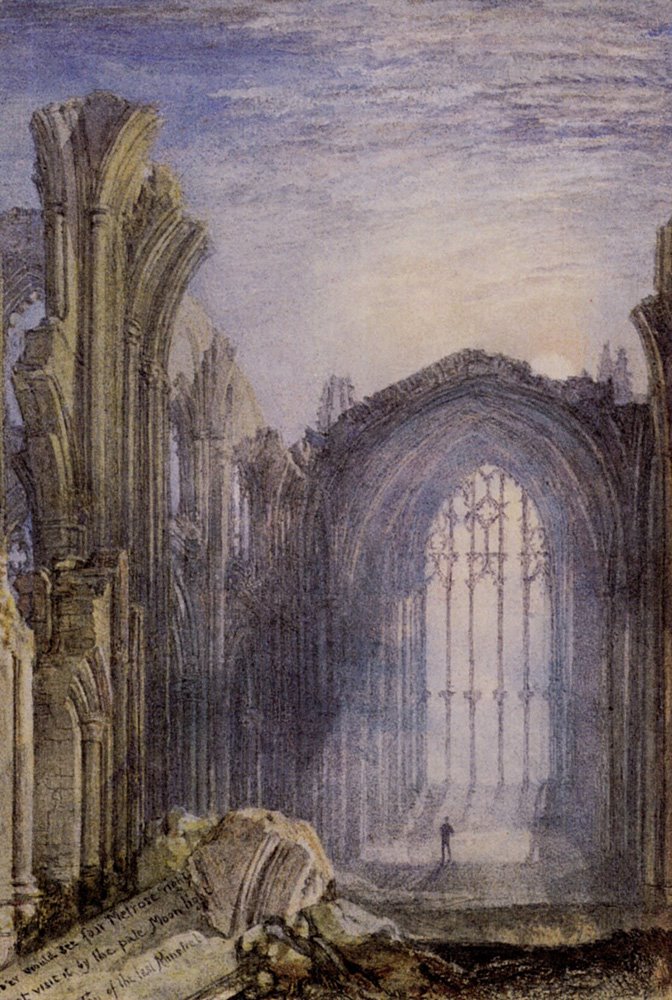
The Vampire of Melrose Abbey


Recorded in the Historia Rerum Anglicarum, published during the twelfth century, between the years of 1196-1198 , Author William of Newburgh (also know as William of Newbury) printed what was believed to be an account of an genuine vampire.


The legend begins with a priest who is not very steadfast with his vows to the church.
He was very negligent to his duties as a priest and dedicated most of his time to unceremonious activities. He had been bestowed with the nickname Hundeprest (translated Dog Priest) because of his adoration of hunting with horse and hound. Shortly after his death, he had attempted to enter the cloister at the Melrose Abbey on several occasions. Without much success, he wandered off in the countryside and even appeared a few times inside the chamber of a woman who had employed him while he was alive. It was said that he moaned and screeched obnoxiously at her. Causing her much alarm, she summoned a elder member of the Abbey to come right away.

The elder monk, one of his consociates, and two other men set out to investigate this report. They set up a watch that following night where the priest was buried. As the night grew colder, three of the men went to a nearby lodge to warm themselves up by a fire, as the elder monk stayed behind to keep watch. Shortly after the three men has left, the elder monk witnessed the priest arise from his grave attempting to approach him. At first, the elder monk was frozen with fear, but he soon gained enough courage to fight the dead priest with his ax, chasing the dead priest back to his grave. When the dead priest reached his grave, the ground completely opened up like a mouth and swallowed him. The grave returned to it’s natural state as though it had never been disturbed.

When the three men had returned from warming themselves, the elder monk told them of his encounter with the dead priest. They listened attentively and credulously to the elder monk and decided they would open the grave the very first thing in the morning as the elder monk had suggested. Upon opening the dead priests grave that morning, they found the dead priest lying in a pool of blood. The blood was coming from a wound that the elder monk had left upon him in his report of struggle with the corpse the night before. They quickly removed the body outside area of the monastery, burned it, and scattered the ashes into the wind.

© Larae of Darkness Embraced

Vampires in the modern ages

The title of this blog was taken from a book by the great Stephen King. It's called 'Salem's Lot.

These were the reviews in the edition I've read:

"One of the few horror writers who can truly make the flesh creep"
Sunday Express

"Not since Dickens has a writer had so many readers by the throat... King's imagination is vast... one of the great storytellers of our time"
Guardian

They said it and I totally agreed Both Thumbs Up Here is the plot (also from my book):

"Thousands of miles away from the small township of 'Salem's Lot, two terrified people still share the secrets of those clapboard houses and tree-lined streets.

One is an eleven-year-old boy. He never speaks but his eyes betray the indescribable horror he has witnessed.

The other is a man plagued by nightmares, a man who knows that soon he and the boy must return to 'Salem's Lot for a final confrontation with the unspeakable evil that lives on in the town where no one is human anymore..."

It's all great, from the characters to the story. And the ending sugests a trailing line to a possible sequel... That unfortunately was not to be written...

I think this is a less morbid story than the usual stories by the same author... But it is as terrifying as all the others...

Hell!! It's really a masterpiece in my opinion!

Sunday, October 30, 2005

The reason why

Devil 3 Grrrreetings dearrrr fellows Devil 3


I started this blog because I love all dark things related to vampires and the undead in general!

After a long time It's finally ready to hostel my posts Hurrr!!!

Many thanks to Carnacki for the encouragement Grim Reaper

Devil 8 Hope it suits your tastes